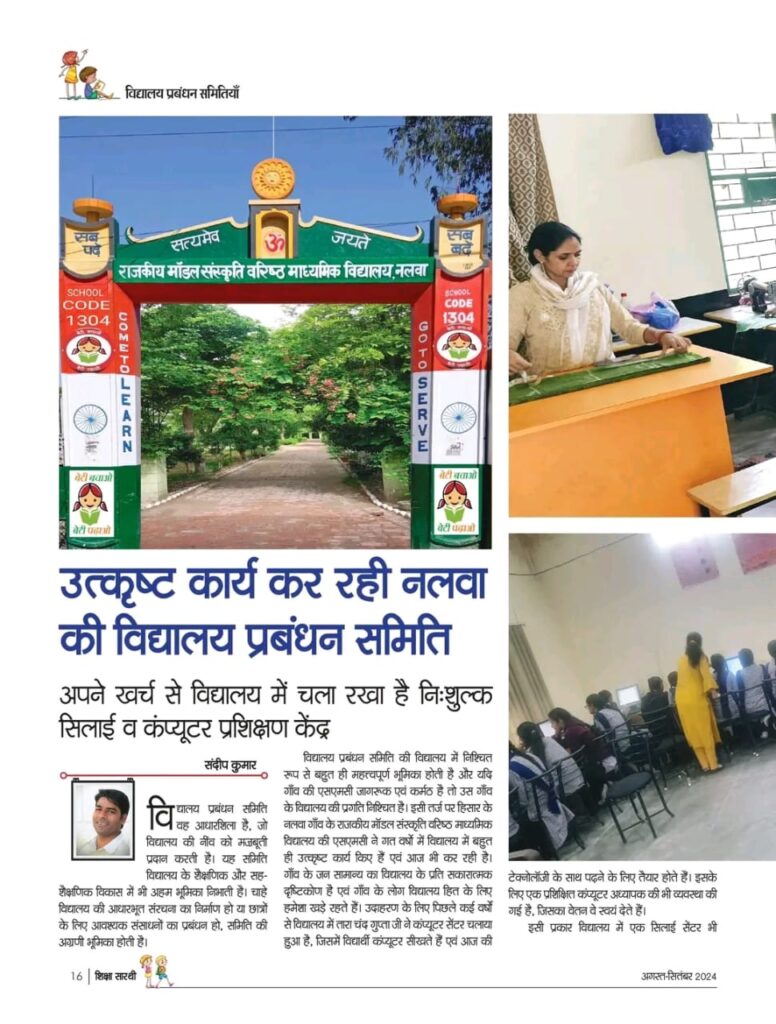
The Role of the School Management Committee: Building a Strong Foundation for Education
The School Management Committee (SMC) is a vital body that plays a pivotal role in the effective functioning and development of a school. Comprising representatives from various stakeholders, including parents, teachers, school administrators, and sometimes students, the SMC acts as a bridge between the school and the community. Its primary objective is to ensure that the school operates efficiently, maintains high educational standards, and provides a safe and nurturing environment for students.
Purpose of the School Management Committee
The SMC is responsible for overseeing the overall management of the school, ensuring that it meets its educational, financial, and operational goals. Its key purposes include:
- Policy Formulation and Implementation:
- The SMC helps develop and implement policies related to academics, discipline, infrastructure, and extracurricular activities.
- It ensures that the school adheres to local education laws and regulations.
- Financial Oversight:
- The committee monitors the school’s budget, ensuring that funds are allocated and utilized effectively.
- It oversees fundraising activities and approves expenditures for infrastructure development, resources, and programs.
- Infrastructure and Resource Management:
- The SMC ensures that the school has adequate facilities, such as classrooms, libraries, laboratories, and sports equipment.
- It addresses maintenance issues and plans for future infrastructure needs.
- Quality of Education:
- The committee works to maintain and improve the quality of education by supporting teacher training programs, curriculum development, and student assessment methods.
- It encourages the use of innovative teaching methods and technology in the classroom.
- Community Engagement:
- The SMC fosters collaboration between the school and the community, encouraging parental involvement and support.
- It organizes events, workshops, and meetings to keep the community informed and engaged in school activities.
Composition of the School Management Committee
The SMC typically includes representatives from the following groups:
- Parents: Parents play a crucial role in voicing the concerns and expectations of the student community.
- Teachers: Teachers provide insights into academic and classroom-related matters.
- School Administrators: The principal and other administrative staff contribute their expertise in school operations and management.
- Students (in some cases): Student representatives may be included to share their perspectives and needs.
- Local Community Members: Community leaders or experts may be invited to offer guidance and support.
Key Responsibilities of the SMC
- Strategic Planning:
- The SMC develops long-term plans for the school’s growth and improvement, setting goals and priorities.
- It identifies challenges and opportunities and formulates strategies to address them.
- Monitoring and Evaluation:
- The committee regularly reviews the school’s performance, including academic results, teacher effectiveness, and student well-being.
- It assesses the implementation of policies and programs and makes necessary adjustments.
- Conflict Resolution:
- The SMC acts as a mediator in resolving conflicts between stakeholders, such as parents, teachers, or students.
- It ensures that all voices are heard and that decisions are made in the best interest of the school.
- Promoting Inclusivity:
- The committee ensures that the school is inclusive and caters to the needs of all students, including those with disabilities or from marginalized backgrounds.
- It promotes diversity and equality within the school community.
- Ensuring Safety and Discipline:
- The SMC oversees the implementation of safety protocols and disciplinary policies.
- It ensures that the school environment is safe, respectful, and conducive to learning.
Benefits of an Effective School Management Committee
- Improved School Performance: The SMC’s oversight and support contribute to better academic and operational outcomes.
- Enhanced Accountability: Transparent decision-making and financial management build trust among stakeholders.
- Stronger Community Ties: Active community involvement fosters a sense of ownership and collaboration.
- Holistic Development: The SMC ensures that the school focuses not only on academics but also on the overall development of students.
Challenges and Solutions
- Lack of Participation:
- Challenge: Some members may not actively participate in meetings or decision-making.
- Solution: Encourage engagement by assigning specific roles and responsibilities and recognizing contributions.
- Limited Resources:
- Challenge: Schools may face financial or infrastructural constraints.
- Solution: The SMC can explore fundraising opportunities, partnerships, and grants to address resource gaps.
- Conflicting Interests:
- Challenge: Differing opinions among stakeholders can lead to conflicts.
- Solution: Foster open communication and focus on consensus-building to resolve disagreements.